
Technology investment is often one of the most important decisions an organisation makes. Enterprise platforms can transform financial management, supply chains, customer relationships, reporting and day-to-day operations.
But technology investment alone does not guarantee business success.
The real question is: How effectively can an organisation turn technology into measurable business value?
For businesses using or considering SAP solutions, the answer goes beyond implementing software. It requires a clear understanding of business objectives, connected processes, reliable data, user adoption and continuous improvement.
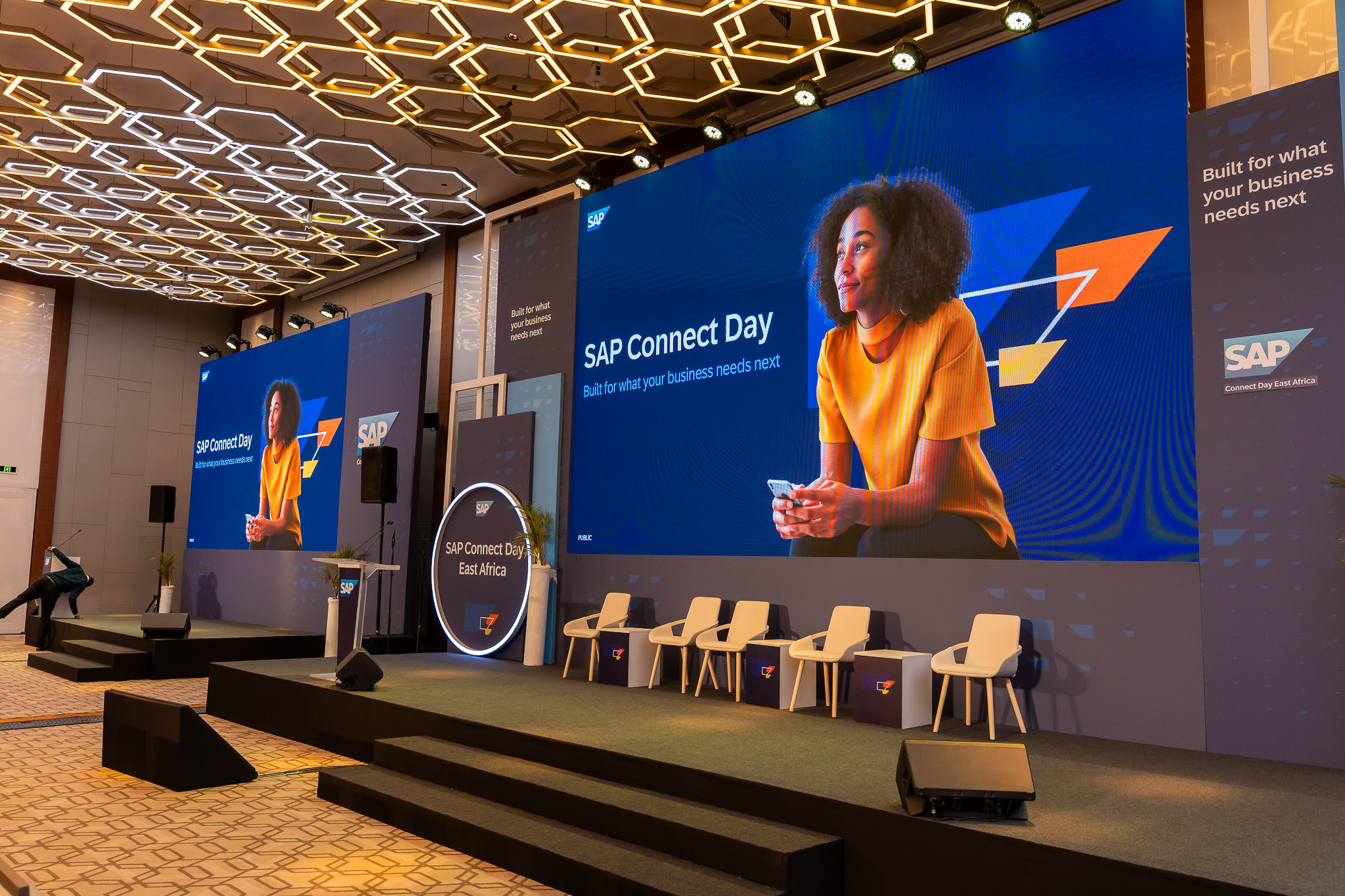
The discussions surrounding enterprise transformation at SAP Connect Day East Africa reinforced the importance of connecting technology decisions with real business outcomes.
For growing organisations, this means looking beyond technology features and focusing on what the technology can achieve for the business.
Technology Should Start with Business Objectives
One of the most common challenges in technology transformation is beginning with the technology rather than the business problem.
Before implementing or upgrading an enterprise platform, organisations should identify what they want to improve.
This could include:
- Reducing operational costs
- Improving financial visibility
- Increasing productivity
- Improving customer service
- Streamlining supply chain operations
- Reducing manual processes
- Improving reporting and decision-making
- Supporting business growth
Once these objectives are clear, technology decisions become much more focused.
The purpose of an SAP implementation should not simply be to introduce a new system. It should be to create a better way of running the business.
Connect Business Processes
Businesses often grow by adding new systems and processes over time. While this can solve immediate needs, it can eventually create fragmented operations.
Finance may use one system, sales another, inventory another and customer service another.
When these systems are disconnected, information becomes difficult to manage.
A connected enterprise environment can provide greater visibility across business functions and reduce unnecessary manual work.
SAP solutions can help organisations bring important business processes together, while integration capabilities can connect SAP with other applications where required.
The result is a more connected flow of information across the organisation.
Make Data Work for the Business
Data is one of the most valuable resources available to modern organisations.
However, having large amounts of data does not automatically lead to better decisions.
Businesses need accurate, accessible and meaningful information.
When business data is properly connected and structured, organisations can gain better visibility into areas such as sales performance, financial results, customer activity, inventory and operational efficiency.
This can help management teams move from assumptions towards evidence-based decision-making.
The objective is not simply to generate more reports. It is to make the right information available when it is needed.
Automate Repetitive Processes
Manual processes can consume significant amounts of employee time.
Activities such as data entry, approvals, reporting and information transfer can often be streamlined through automation.
Automation can improve consistency while reducing the risk of human error.
For employees, this means spending less time on repetitive administrative work and more time on activities that create business value.
For management, it can mean faster processes, better visibility and improved operational efficiency.
The most effective automation strategies focus on processes where there is a clear opportunity to improve performance.
Use AI Where It Creates Real Impact
Artificial intelligence is creating new opportunities for businesses, but organisations should approach AI with a clear business objective.
Rather than asking, “Where can we use AI?”, businesses should ask:
“Which business challenge can AI help us solve?”
Depending on the organisation and its processes, AI can support areas such as forecasting, data analysis, customer engagement, process automation and decision support.
When AI is connected to enterprise data and business processes, it can become much more valuable than standalone experimentation.
The future of enterprise AI will increasingly depend on how effectively it can work within the broader business environment.
Improve Customer Experience
Business value is not limited to internal efficiency.
Technology can also play a major role in improving customer experiences.
Customers expect organisations to respond quickly, provide accurate information and deliver consistent experiences across different channels.
Connected enterprise systems can help businesses gain a clearer understanding of customer interactions and business activity.
With better access to information, teams can respond more effectively to customer needs and make decisions faster.
For growing organisations, this can become an important competitive advantage.
Build for Scalability
Technology should support today's business while preparing it for tomorrow.
As organisations grow, their technology requirements also change.
New employees, customers, markets, products and business processes can introduce additional complexity.
A scalable technology architecture helps organisations adapt without having to rebuild their entire technology environment every time the business changes.
This is why scalability should be considered from the beginning of a transformation programme.
The right technology strategy should provide a foundation that can evolve with the organisation.
Measure the Results
A successful technology transformation should be measurable.
Businesses should define appropriate KPIs before implementation and continue monitoring them after deployment.
Depending on the project, these could include:
- Process completion time
- Operational costs
- Employee productivity
- Customer response time
- Order processing efficiency
- Data accuracy
- Revenue performance
- Forecasting accuracy
Measuring these outcomes helps organisations understand whether their technology investment is delivering the expected value.
It also creates opportunities for continuous improvement.
The Importance of the Right Technology Partner
Enterprise technology transformation can involve multiple systems, processes, stakeholders and technical requirements.
Having the right technology partner can make the journey significantly more effective.
A strong partner should understand not only the technology but also the business challenges behind the project.
This includes understanding existing processes, identifying integration requirements, supporting implementation and helping organisations continuously improve their technology environment.
The objective should always be to create a solution that works for the business rather than forcing the business to work around the technology.
How A-SofTech Helps Businesses Create More Value
At A-SofTech, we focus on connecting technology with business requirements.
We understand that every organisation has different processes, challenges and growth objectives. Our role is to help businesses identify and implement technology solutions that support those objectives.
By combining enterprise technology expertise with a business-focused approach, we help organisations work towards:
- More connected business processes
- Better access to business information
- Improved operational efficiency
- Greater scalability
- Stronger technology integration
- Better customer and employee experiences
Our participation as a Platinum Sponsor at SAP Connect Day East Africa reflects our commitment to being part of the wider conversation around enterprise technology and digital transformation.
Turning Technology into Long-Term Value
The success of an SAP or enterprise technology investment should ultimately be measured by what it enables the business to achieve.
Better processes.
Better information.
Faster decisions.
Greater efficiency.
Stronger customer experiences.
And the ability to scale with confidence.
Technology is the enabler, but business value is the destination.
As organisations across East Africa continue their digital transformation journeys, the focus will increasingly shift from implementing technology to maximising the value that technology creates.
With the right strategy, connected systems and a clear focus on business outcomes, organisations can turn technology investment into a foundation for sustainable growth.
A-SofTech is committed to helping businesses take that next step — transforming technology from an operational necessity into a strategic business advantage.