
The future of business is being shaped by more than digital technology alone. Organisations today are looking for ways to use data more effectively, automate processes, make faster decisions and create connected experiences across every part of the business.
The conversations around enterprise technology at SAP Connect Day East Africa highlighted an important shift: businesses are moving from traditional digital transformation toward intelligent business transformation.
For organisations across East Africa, this shift presents a significant opportunity. With the right combination of cloud technology, data, artificial intelligence, automation and integrated enterprise systems, businesses can build operations that are more agile, connected and prepared for long-term growth.
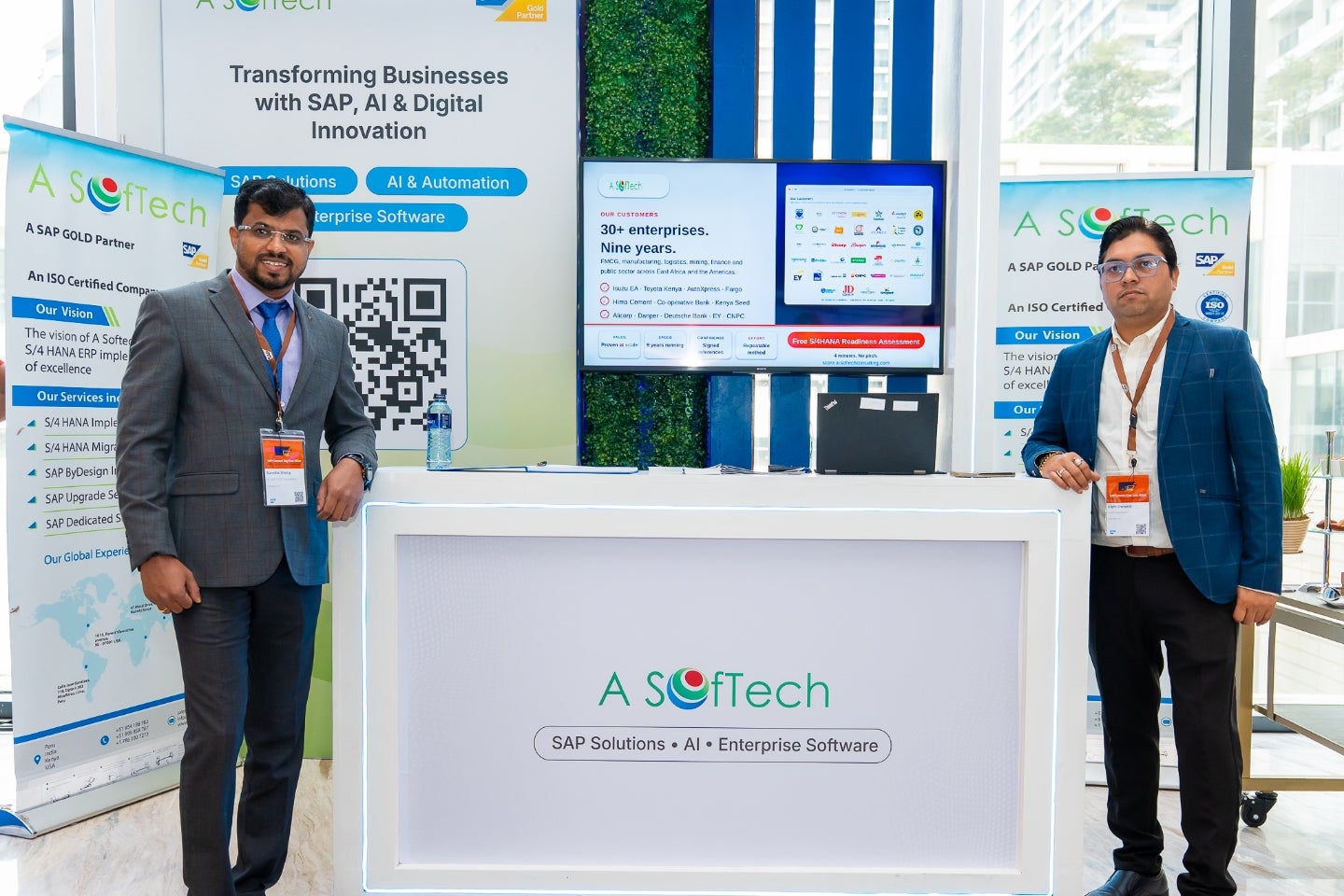
As a Platinum Sponsor of SAP Connect Day East Africa, A-SofTech was proud to be part of the conversations around how technology can create meaningful business outcomes. More importantly, the event provided an opportunity to reflect on the technology trends that are shaping the next phase of enterprise transformation.
From Digital Transformation to Intelligent Transformation
Digital transformation has been a priority for businesses for years. Organisations have invested in enterprise applications, cloud platforms, customer relationship systems and digital workflows to modernise their operations.
However, simply moving from manual processes to digital systems is no longer enough.
The next stage is about making those digital systems intelligent.
An intelligent business does not simply collect information. It uses that information to identify opportunities, improve processes, support employees and make better decisions.
This means technology needs to work together rather than operate in isolated environments. Business applications, data platforms, cloud infrastructure and AI capabilities must be connected to create a complete view of business operations.
AI Is Becoming a Business Capability
Artificial intelligence is quickly moving from an emerging technology to a practical business capability.
Businesses are exploring AI to automate repetitive tasks, analyse large volumes of information, support decision-making and improve customer interactions.
The real opportunity, however, is not simply adopting AI because it is a growing trend. Organisations need to identify where AI can create measurable value.
For example, AI can help businesses:
- Analyse large volumes of business data
- Identify patterns and trends
- Improve forecasting
- Automate repetitive processes
- Support employees with faster access to information
- Personalise customer experiences
- Improve operational decision-making
The most successful AI strategies will therefore be closely connected to business objectives.
Data Is the Foundation of Intelligent Business
Every intelligent business depends on reliable data.
Organisations generate information across finance, sales, customer service, supply chain, human resources and other business functions. When that information is spread across disconnected systems, creating a complete view of the business becomes difficult. This is where data integration becomes critical. Businesses need to be able to connect information from different applications and make it available to the right people at the right time. Better-connected data can help organisations understand what is happening across the business and respond more effectively. Instead of relying only on historical reports, organisations can move towards more timely and data-driven decision-making.
Cloud Is Enabling Greater Business Agility
Cloud technology has also become an important part of modern enterprise transformation.
For growing businesses, cloud platforms can provide the scalability and flexibility needed to adapt to changing requirements. Organisations can access enterprise capabilities without relying entirely on traditional infrastructure and can scale technology resources as their needs evolve.
Cloud also supports collaboration and integration between different applications and business functions.
However, cloud adoption should not be treated simply as an infrastructure decision. Businesses should consider how cloud technology fits into their broader digital strategy, security requirements, integration architecture and long-term growth plans.
Integration Is No Longer Optional
One of the biggest challenges businesses face is fragmented technology.
A company may have separate systems for finance, customer management, inventory, sales, HR and operations. If these systems cannot communicate effectively, employees may spend valuable time manually transferring information between platforms.
Integration can help create a more connected technology environment.
When applications and data work together, businesses can reduce duplication, improve information flow and create more consistent processes.
For organisations looking to become more intelligent and agile, integration should therefore be considered a strategic priority rather than simply a technical requirement.
Automation Can Transform Everyday Operations
Intelligent transformation is also about improving how work gets done.
Many businesses still rely on manual processes for activities such as approvals, reporting, data entry, document processing and internal communication.
Automation can reduce the amount of repetitive work employees need to perform and allow teams to focus on higher-value activities.
When automation is combined with integrated systems and intelligent technologies, businesses can create workflows that are faster, more consistent and easier to manage.
The goal is not to replace people. It is to give employees better tools and allow them to spend more time on activities that require expertise, creativity and judgement.
What This Means for Businesses in East Africa
East African businesses operate in an increasingly competitive and digitally connected environment.
Organisations need to respond quickly to customer expectations, manage costs effectively and find new ways to improve productivity.
Technology can play a major role in this transformation, but the approach needs to be practical.
Businesses should focus on technology initiatives that address real operational challenges and support measurable business objectives.
Whether the priority is improving financial visibility, streamlining supply chain operations, enhancing customer experiences or creating better management insights, technology should ultimately contribute to better business performance.
This is where intelligent enterprise solutions can make a meaningful difference.
A-SofTech's Perspective
At A-SofTech, we believe technology should always be connected to business outcomes.
Our approach focuses on helping organisations understand their business requirements and identify technology solutions that can support efficiency, scalability and sustainable growth.
From enterprise applications and system integration to data, cloud and digital transformation initiatives, businesses need a technology strategy that connects individual solutions into a larger business vision.
The future will belong to organisations that can combine technology with strong processes, reliable data and informed decision-making.
Looking Ahead
SAP Connect Day East Africa provided an important platform for conversations around the future of enterprise technology. But the value of these conversations extends beyond a single event.
AI, data, cloud, automation and integration are becoming fundamental components of modern business.
The organisations that successfully bring these capabilities together will be better positioned to adapt to change, improve efficiency and create new opportunities.
The journey towards intelligent business is not about adopting every new technology. It is about understanding where technology can make a meaningful difference and building the right foundation to support that transformation.
A-SofTech remains committed to helping businesses navigate this journey and turn technology investments into practical, measurable business outcomes.